
Nose Implant Surgery in Seoul, Korea
Raise and define a low nasal bridge with a custom-carved implant, combined with cartilage tip support for a safe, natural result.
- Board-certified plastic surgeons
- English-speaking support
- 400 m from Gangnam Station
Nose implant surgery augments a low bridge with a carved implant (commonly silicone or Gore-Tex/ePTFE) placed over the nasal bones. For safety and a natural look, the tip is usually supported with the patient's own cartilage rather than covered by the implant.
- Surgery time
- Approx. 1–2 hours
- Anesthesia
- Sleep (IV) or general anesthesia
- Splint & stitches out
- Around day 5–7
- Recommended stay in Seoul
- 7–10 days
Who is a candidate for a nose implant?
It suits patients with a low or flat bridge who want more definition.
Patients who prefer to avoid implants can consider autologous cartilage.
- Low or flat nasal bridge
- Bridge that looks short between the eyes
- Healthy, sufficiently thick skin
- Desire for a defined but natural profile
- No active infection in the nose
Common implant materials
Silicone
Easy to carve and remove if needed; widely used for bridge height.
Gore-Tex (ePTFE)
Soft, tissue-integrating material for a natural feel.
Autologous cartilage
Your own tissue; used for the tip and sometimes the bridge.
Custom carving
Each implant is shaped to your bone and skin thickness.
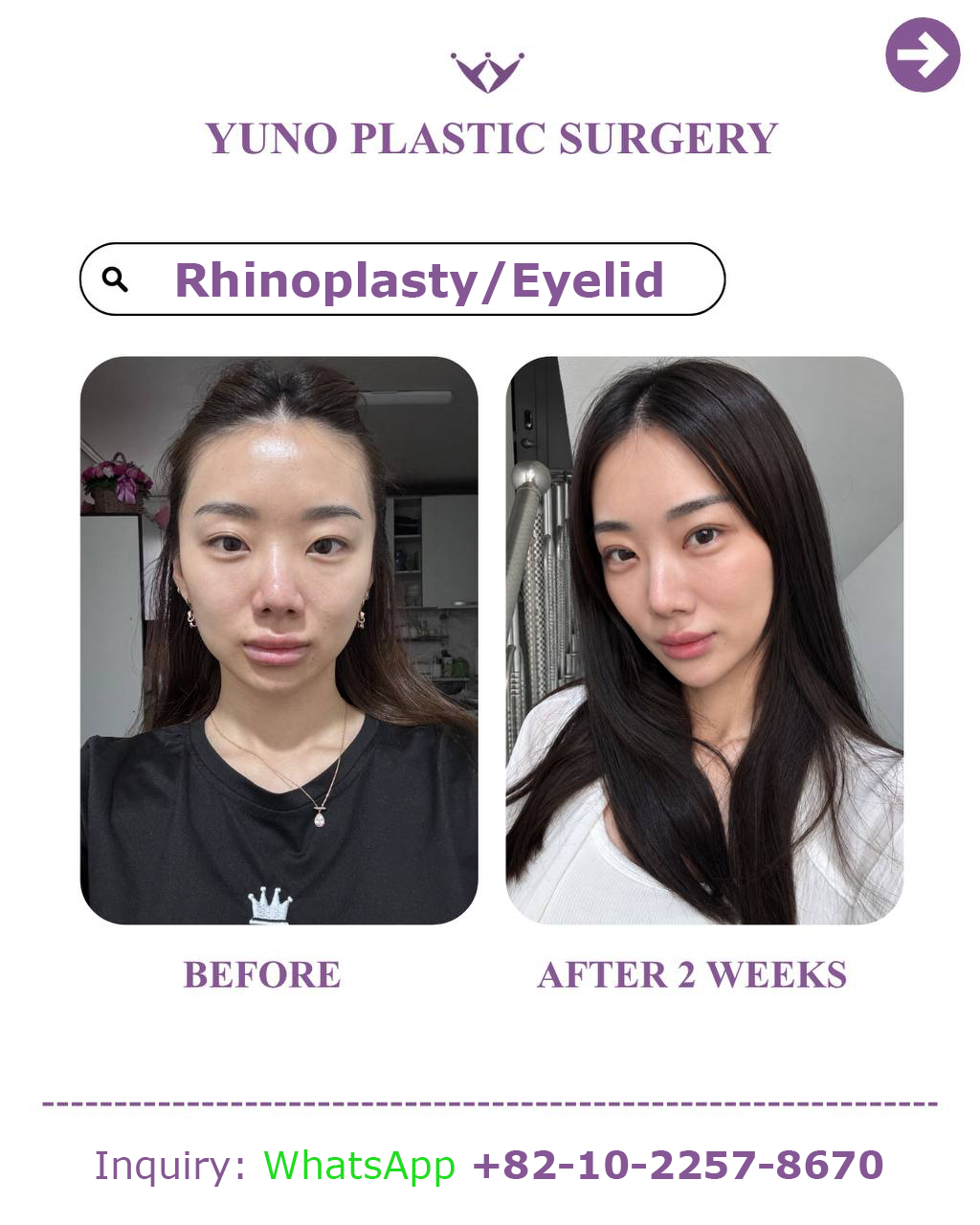
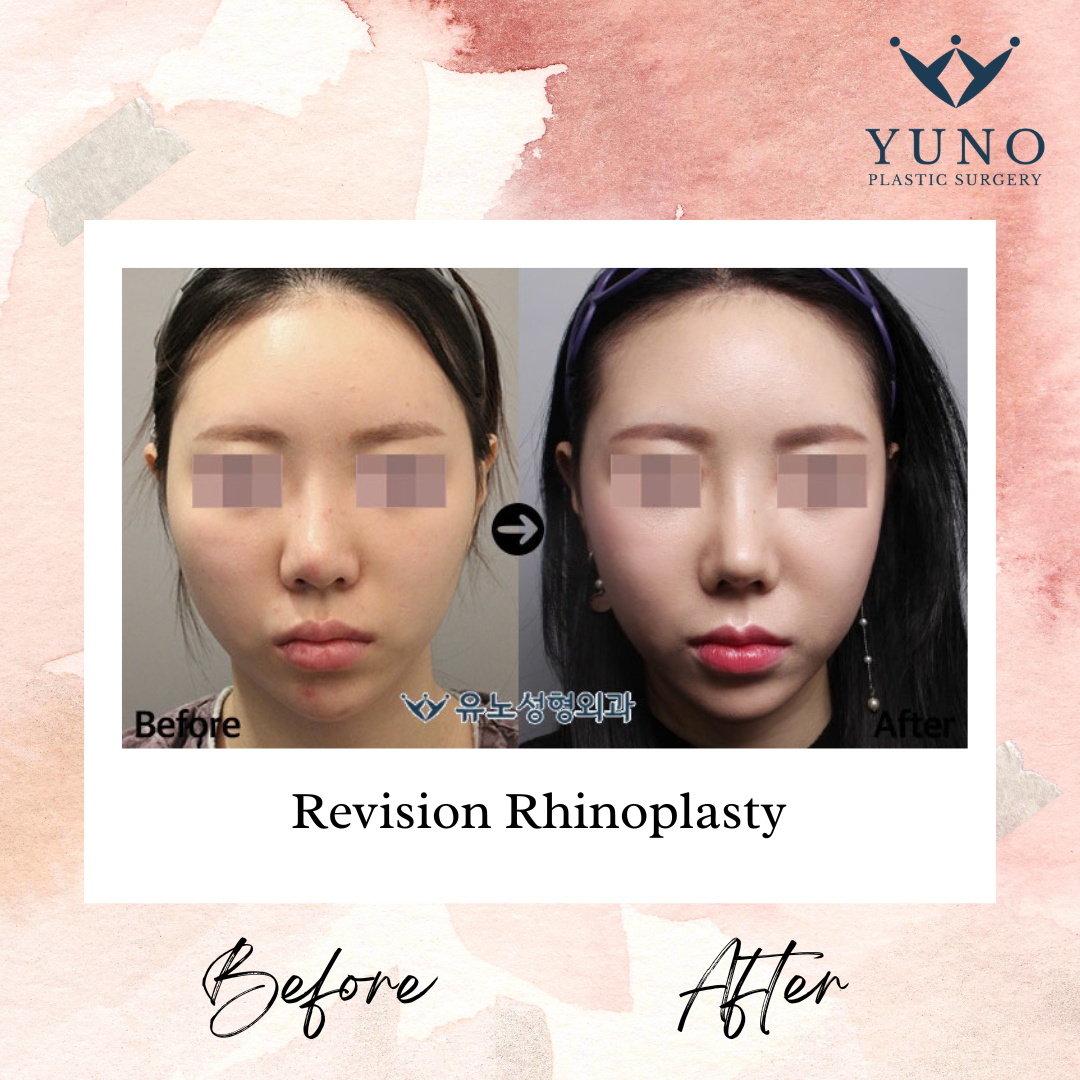
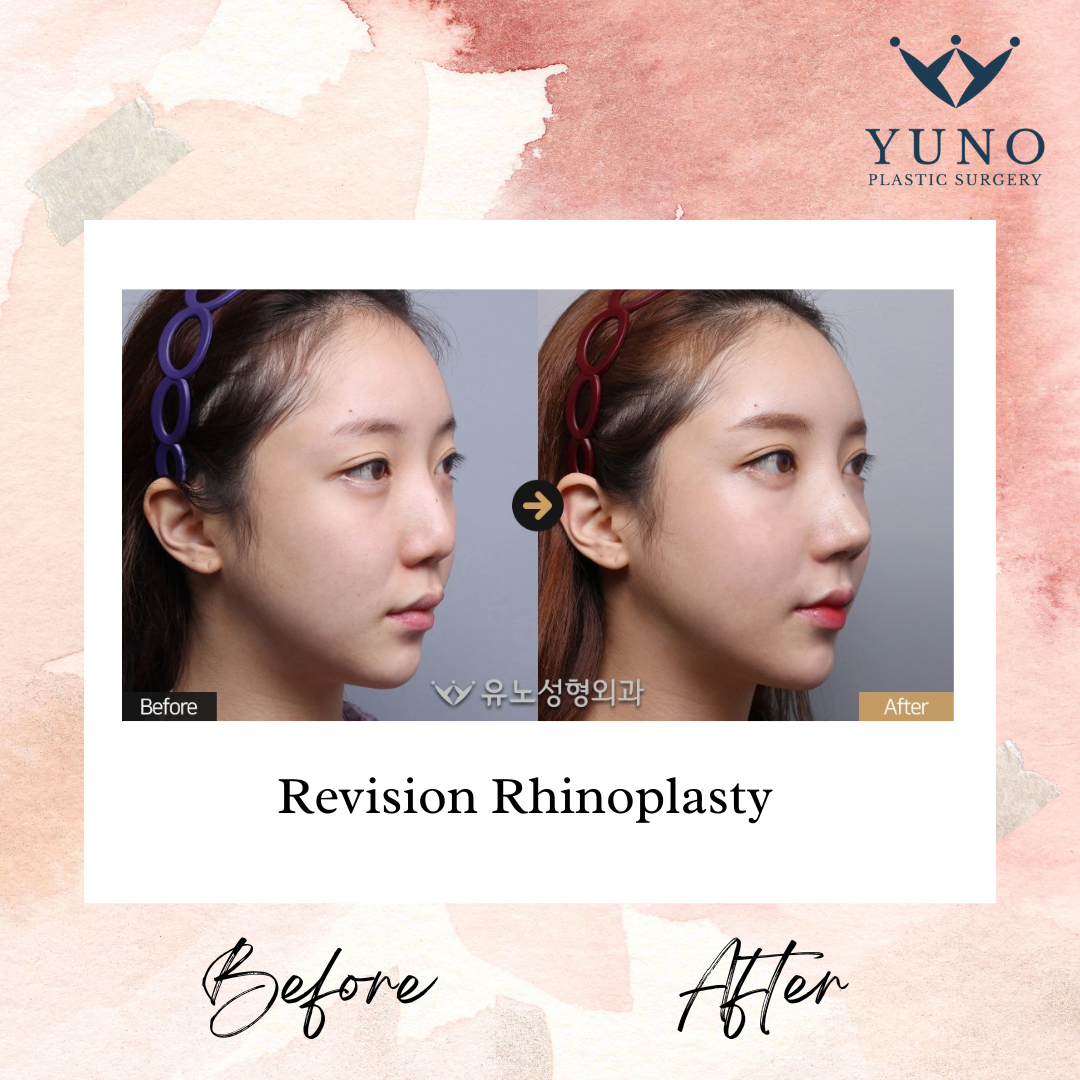
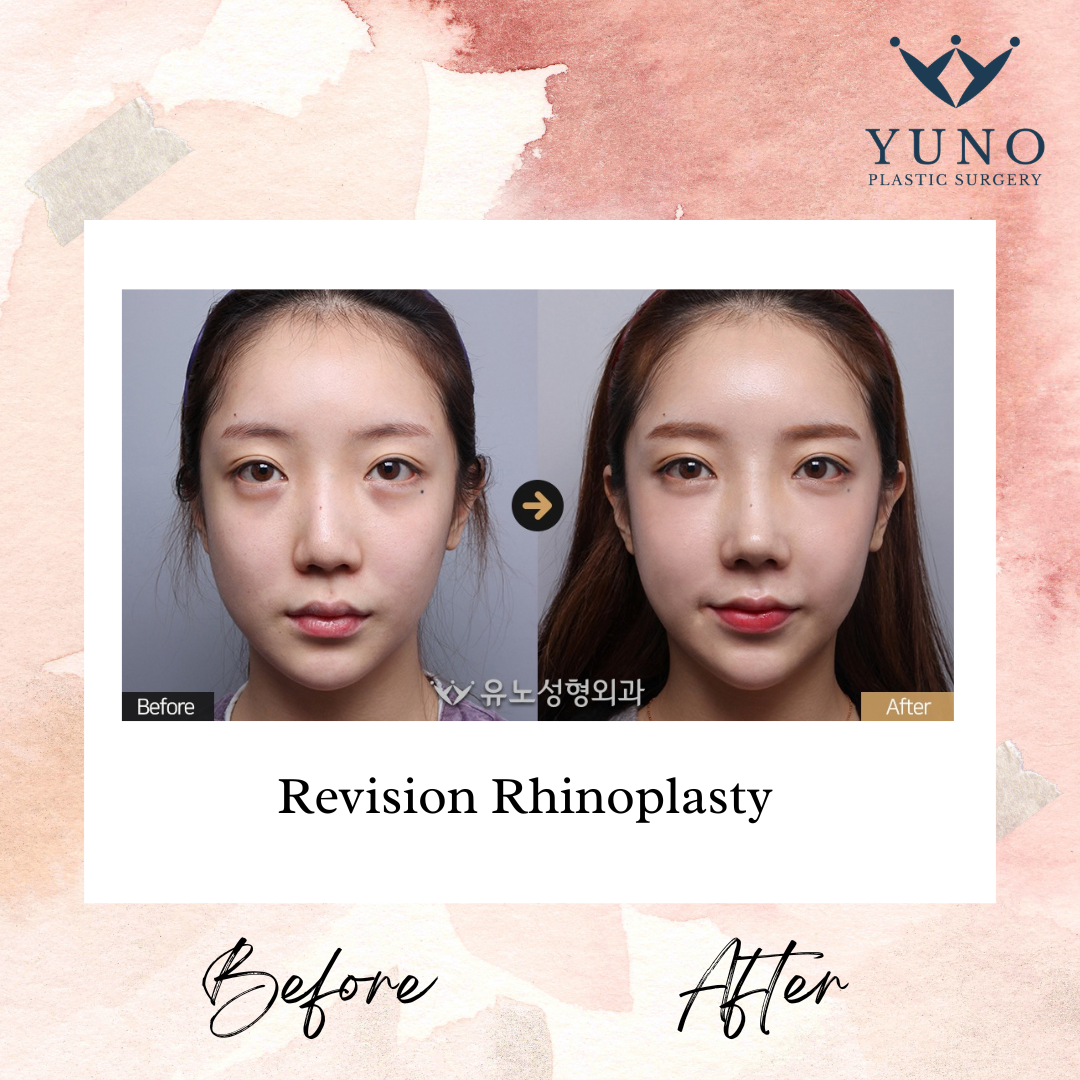
Nose implant before & after
A carefully sized implant adds definition without looking artificial.
Results vary between individuals depending on anatomy, technique and healing. Possible complications include bleeding, infection, inflammation and asymmetry. Photos are shared with patient consent and identities are protected.
How we keep implant rhinoplasty safe
Proper sizing
Avoiding an oversized implant reduces skin tension.
Cartilage tip
Tip support with cartilage protects the skin — see ear cartilage.
Precise pocket
An accurate pocket prevents shifting.
Sterile handling
Strict infection control during surgery.
Anesthesia safety
Managed by board-certified anesthesiologists.
Revision option
Implant problems can be corrected — see revision rhinoplasty.
Nose implant surgery process for international patients
- Online consultation Send front and side photos via WhatsApp for a preliminary review.
- In-clinic consultation Your surgeon examines the nose, explains options, risks and a personalized quote.
- Surgery day Surgery with anesthesia managed by a board-certified anesthesiologist.
- Splint & stitch removal Usually around day 5–7, followed by a check-up.
- Follow-up Remote aftercare support after you return home.
Nose implant recovery timeline
Typical milestones after surgical rhinoplasty (individual healing varies):
| Days 1–3 | Peak swelling and bruising; keep the head elevated and rest. |
|---|---|
| Days 5–7 | Splint and stitches removed; light daily activities resume. |
| Weeks 2–3 | Most bruising fades; many patients are comfortable flying home. |
| Months 1–3 | Most swelling subsides; avoid pressure on the nose and contact sports as instructed. |
| 6–12 months | Final contour, especially of the tip, becomes fully visible. |
Detailed instructions: Rhinoplasty aftercare guide · Pricing factors: Nose surgery cost in Korea
Why choose YUNO Plastic Surgery for nose implant surgery?
Nose implant surgery FAQ
Will the implant be visible?
Is a nose implant permanent?
Silicone or Gore-Tex — which is better?
Can the implant shift?
Can an implant be used in the tip?
How much does it cost?
Explore related nose procedures
Considering nose implant surgery in Seoul?
Send your photos and goals for a preliminary review by our team.
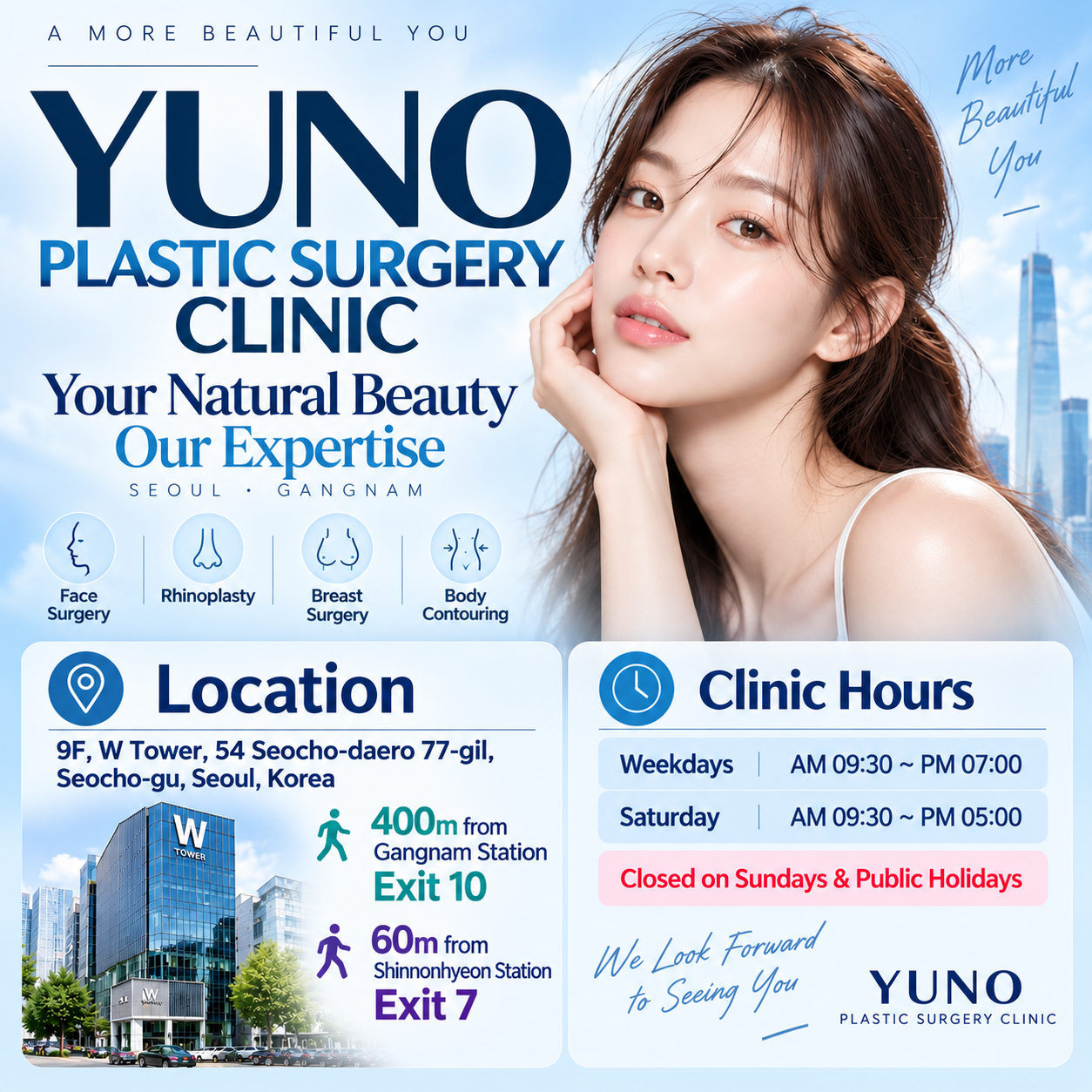
YUNO Plastic Surgery Clinic · 9F, W Tower, 54 Seocho-daero 77-gil, Seocho-gu, Seoul, Korea · 400 m from Gangnam Station Exit 10, 60 m from Sinnonhyeon Station Exit 7 · Mon–Fri 09:30–19:00, Sat 09:30–17:00 (closed Sundays & public holidays)