
Revision Rhinoplasty in Seoul, Korea
Secondary nose surgery to correct the shape, structure or breathing problems left by a previous rhinoplasty — planned by board-certified plastic surgeons around your nasal anatomy and surgical history.
- Board-certified plastic surgeons
- English-speaking support
- 400 m from Gangnam Station
Revision rhinoplasty is a second (or subsequent) nose surgery that corrects an unsatisfactory or problematic result from earlier rhinoplasty. Because scar tissue and depleted cartilage make it more complex than a first surgery, it usually involves an open approach and cartilage grafts (septal, ear or rib) to rebuild a stable, natural-looking structure.
- Surgery time
- Approx. 2–4 hours
- Anesthesia
- General or sleep (IV) anesthesia
- Splint & stitches out
- Around day 7
- Recommended stay in Seoul
- 10–14 days
Who is a good candidate for revision rhinoplasty?
You may be a candidate if your first nose surgery healed fully but the result does not match your goals, or if it created a new structural or functional problem.
Most surgeons recommend waiting at least 6–12 months after the previous surgery so swelling settles and tissue softens. Urgent issues such as infection or implant exposure are assessed sooner.
- Previous rhinoplasty at least 6–12 months ago
- Unnatural, over-corrected or asymmetric nose shape
- Implant that has shifted, become visible or feels uncomfortable
- Breathing difficulty after the first surgery
- Good general health and realistic expectations
Why patients choose revision nose surgery
Unnatural or over-done appearance
A bridge that is too high, a pinched or overly lifted tip, or a nose that looks "operated" can be rebalanced for a softer, more natural profile.
Implant problems
Deviated, visible or contracted implants can be removed, replaced or exchanged for your own tissue after examination.
Asymmetry or a crooked nose
Uneven nostrils, a deviated bridge or tip asymmetry can be refined with precise structural support.
Breathing (functional) issues
Septal deviation or valve narrowing after surgery can be corrected together with the aesthetic revision.
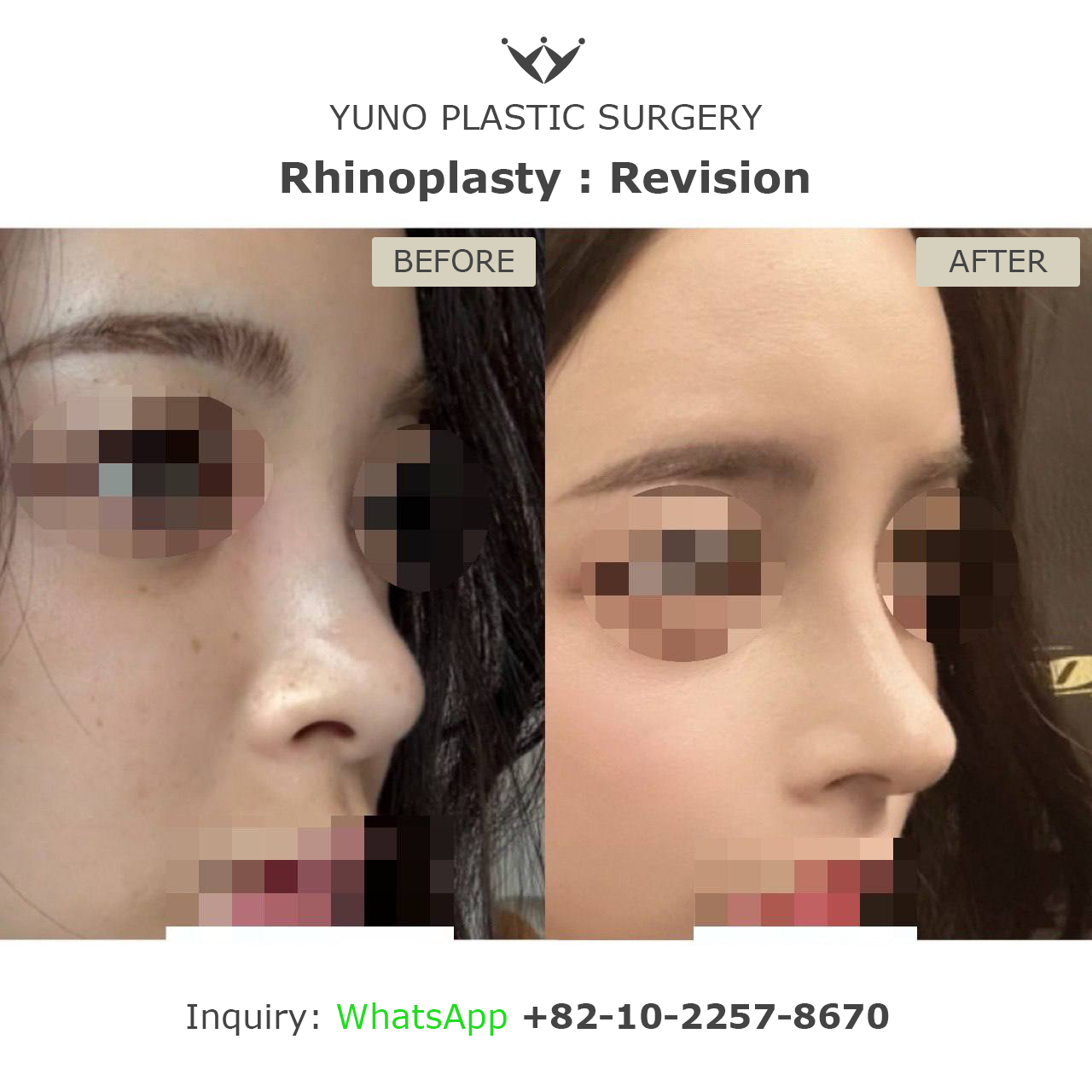
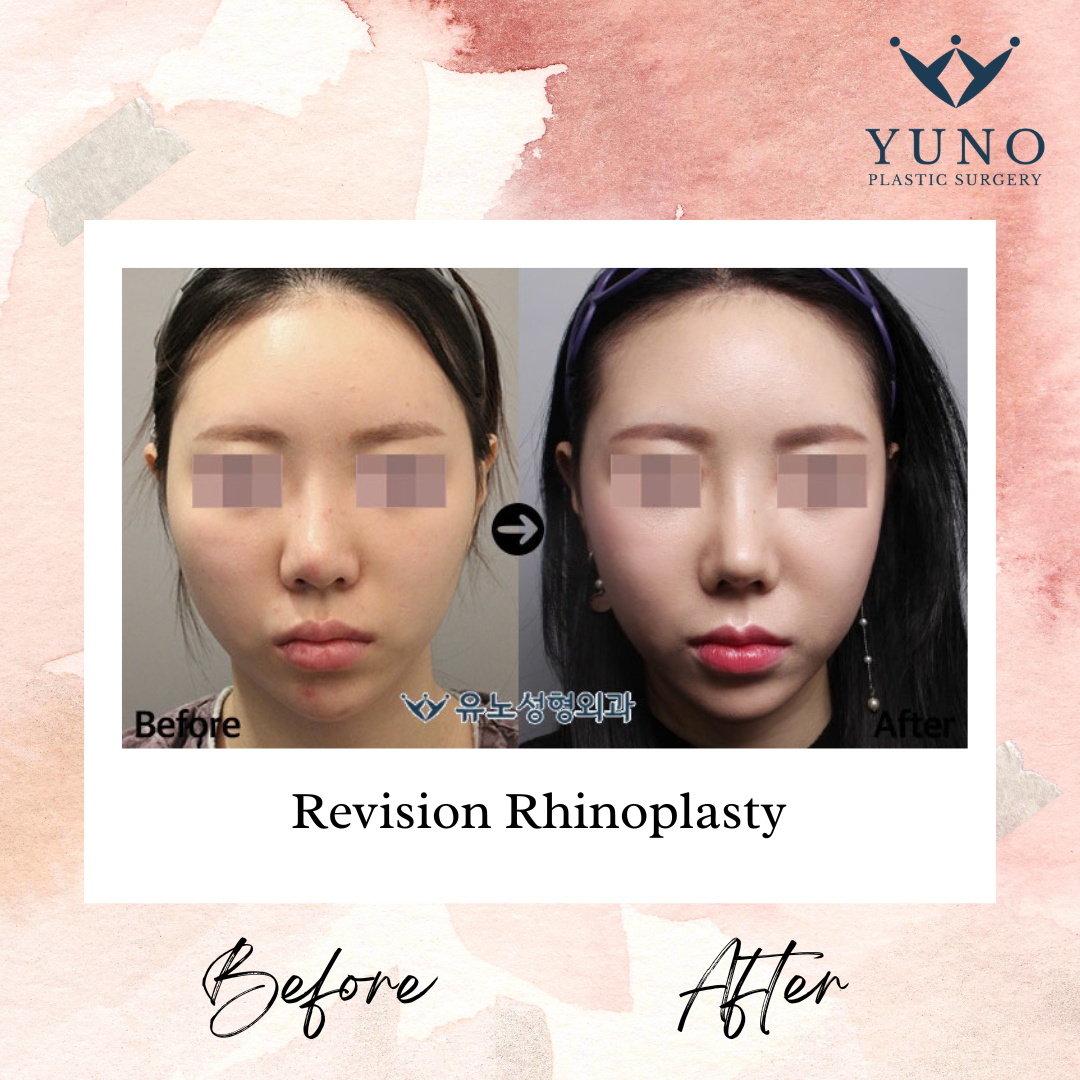
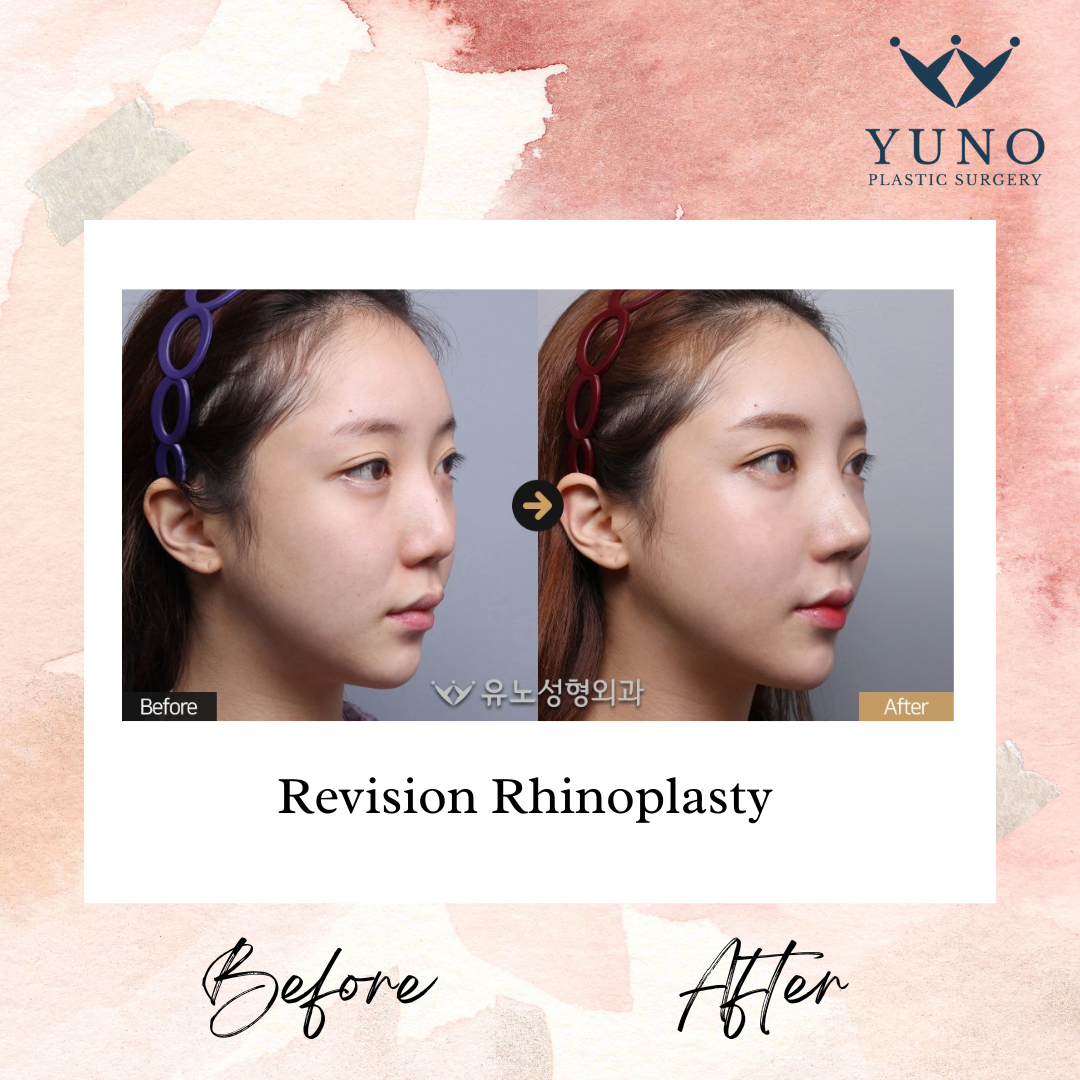
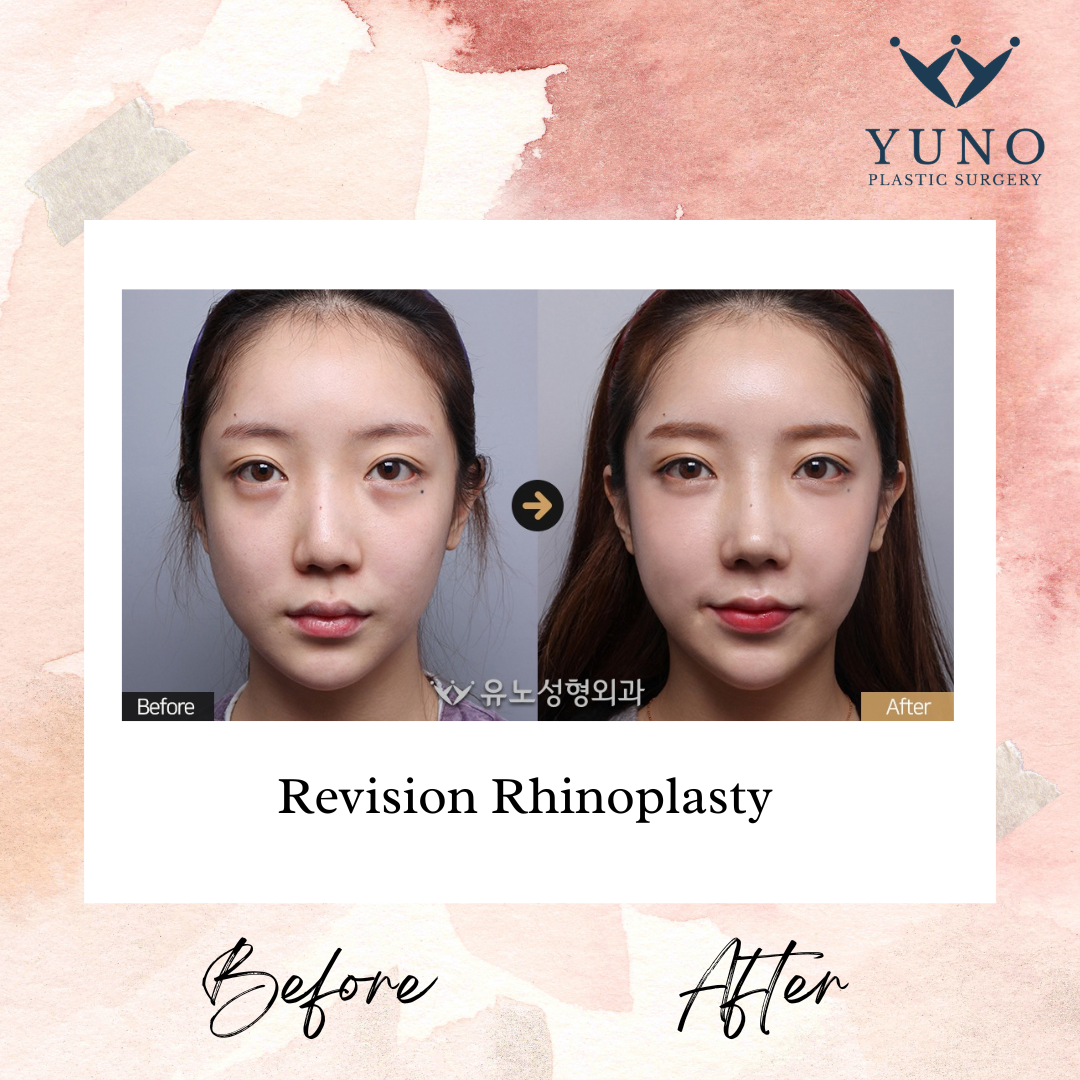
Revision rhinoplasty before & after
This case shows a revision focused on a smoother bridge line and a better-supported tip, aiming for a natural side profile rather than a dramatic change.
Results vary between individuals depending on anatomy, previous surgery, technique and healing. Possible complications include bleeding, infection, inflammation and asymmetry.
How revision rhinoplasty is performed
The plan is decided only after reviewing your previous surgery and examining the current nasal structure.
Open approach
Most revisions use an open technique to release scar tissue and see the framework clearly.
Cartilage grafting
Septal, ear or rib cartilage rebuilds support when cartilage is weak or missing. Learn about cartilage graft surgery and ear cartilage rhinoplasty.
Implant removal or exchange
Problematic implants can be removed or replaced. See nose implant surgery for material options.
Tip refinement
Re-shaping or re-supporting the tip corrects pinching, drooping or asymmetry — related to tip plasty.
Bridge correction
An over-high or uneven dorsum is lowered or smoothed, similar to dorsal hump reduction.
Functional correction
Septum and nasal valve work can be combined to improve airflow when breathing is affected.
Revision rhinoplasty process for international patients
- Online consultation Send photos and details of your previous surgery via WhatsApp for a preliminary review.
- In-clinic consultation Your surgeon examines the nose, explains options, risks and a personalized quote.
- Surgery day Surgery with anesthesia managed by a board-certified anesthesiologist.
- Splint & stitch removal Usually around day 7, followed by a check-up.
- Follow-up Remote aftercare support after you return home.
Revision rhinoplasty recovery timeline
Swelling after revision surgery can take longer to resolve than after a first rhinoplasty. Typical milestones:
| Days 1–3 | Peak swelling and bruising; keep the head elevated and rest. |
|---|---|
| Around day 7 | Splint and stitches removed; most patients return to light daily activities. |
| Weeks 2–3 | Most bruising fades; many patients feel comfortable flying home. |
| Months 1–3 | Majority of swelling subsides; avoid pressure on the nose and contact sports as instructed. |
| 6–12 months+ | Final contour, especially of the tip, gradually becomes visible. |
Detailed instructions: Rhinoplasty aftercare guide · Pricing factors: Nose surgery cost in Korea
Why choose YUNO Plastic Surgery for revision rhinoplasty?
Revision rhinoplasty FAQ
How long should I wait before revision rhinoplasty?
Is revision rhinoplasty more difficult than a first rhinoplasty?
Can my silicone implant be removed or replaced?
How long should I stay in Korea for revision rhinoplasty?
Can revision rhinoplasty also improve breathing?
How much does revision rhinoplasty cost in Korea?
Explore related nose surgery
Considering revision rhinoplasty in Seoul?
Send your photos and surgical history for a preliminary review by our team.
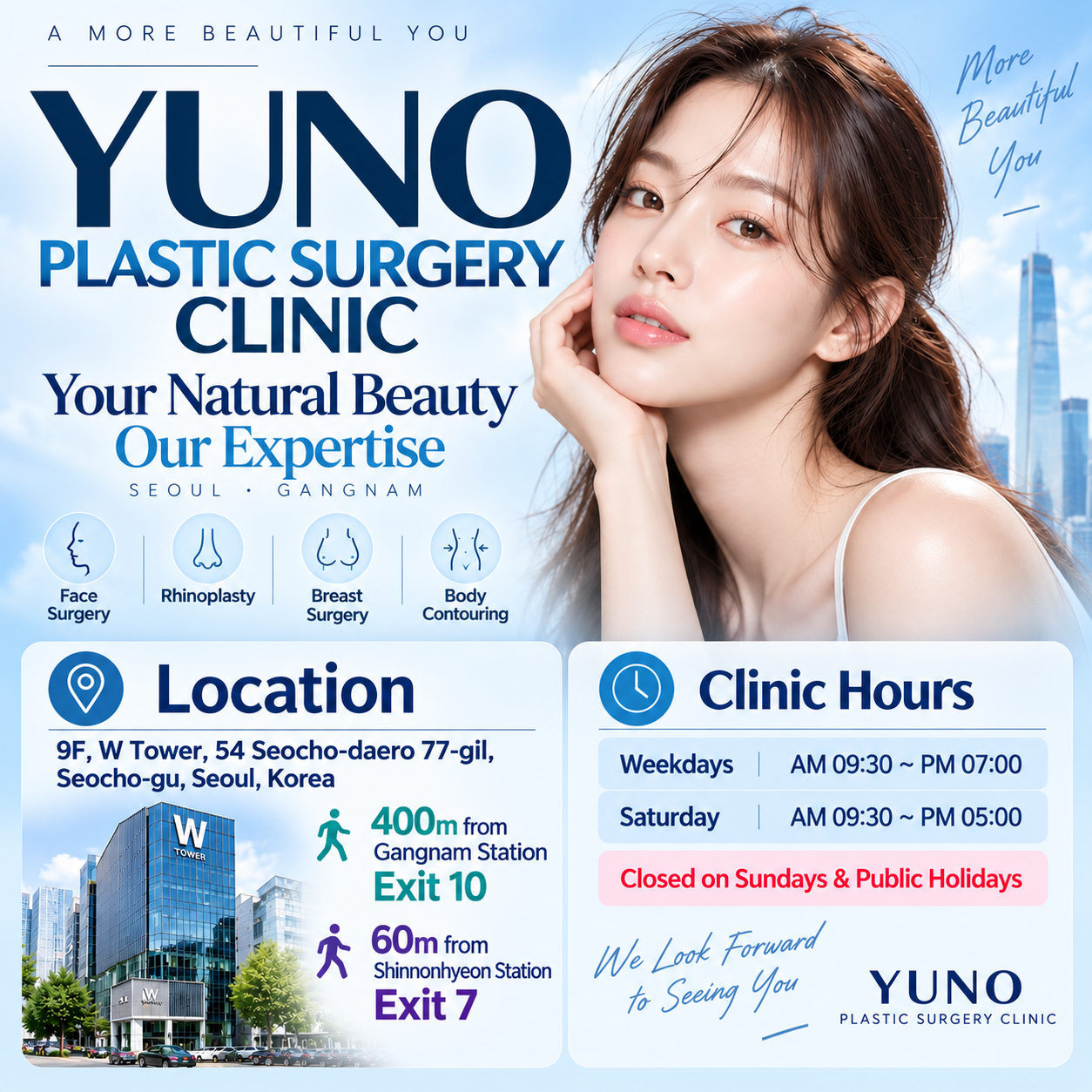
YUNO Plastic Surgery Clinic · 9F, W Tower, 54 Seocho-daero 77-gil, Seocho-gu, Seoul, Korea · 400 m from Gangnam Station Exit 10, 60 m from Sinnonhyeon Station Exit 7 · Mon–Fri 09:30–19:00, Sat 09:30–17:00 (closed Sundays & public holidays)